
Shadow work for men in the UK What It Actually Involves
Men are going to therapy in numbers we haven't seen before. That's progress. But many are finding that talk therapy, while useful, doesn't always reach the parts they came to address. The repeating argument with a partner. The flash of rage that feels out of proportion. The persistent sense of performing rather than being. These aren't problems you can think your way out of. They're rooted in material you pushed down years ago, often before you had language for it.
This is where shadow work comes in. And if you're reading this, you've likely already sensed that something else is needed.
What Shadow Work for Men in the UK Actually Means
Shadow work is based on Carl Jung's concept of the shadow: the parts of yourself you disowned, usually early in life, because they weren't safe or acceptable to express. For many men, that meant burying emotions like sadness, fear or vulnerability. It also meant exiling qualities like tenderness, playfulness or creative expression. What gets buried doesn't disappear. It shows up sideways: in projection, in defensiveness, in the parts of yourself you can't quite access even when you want to.
The work itself involves bringing those disowned parts into conscious awareness. Not through analysis alone, but through guided process work that engages the body, the emotions and the stories you've been telling yourself. It's not cathartic release for its own sake. It's structured, relational and designed to help you integrate what you've been carrying unconsciously.
In the UK, shadow work is still relatively niche compared to therapy or coaching, but it's growing. Men who've done years of personal development are finding it offers the depth they've been looking for. It's not a replacement for therapy. It's a different entry point, particularly for those who find the therapeutic frame too cerebral or transactional.
Why Group Work Matters for Men
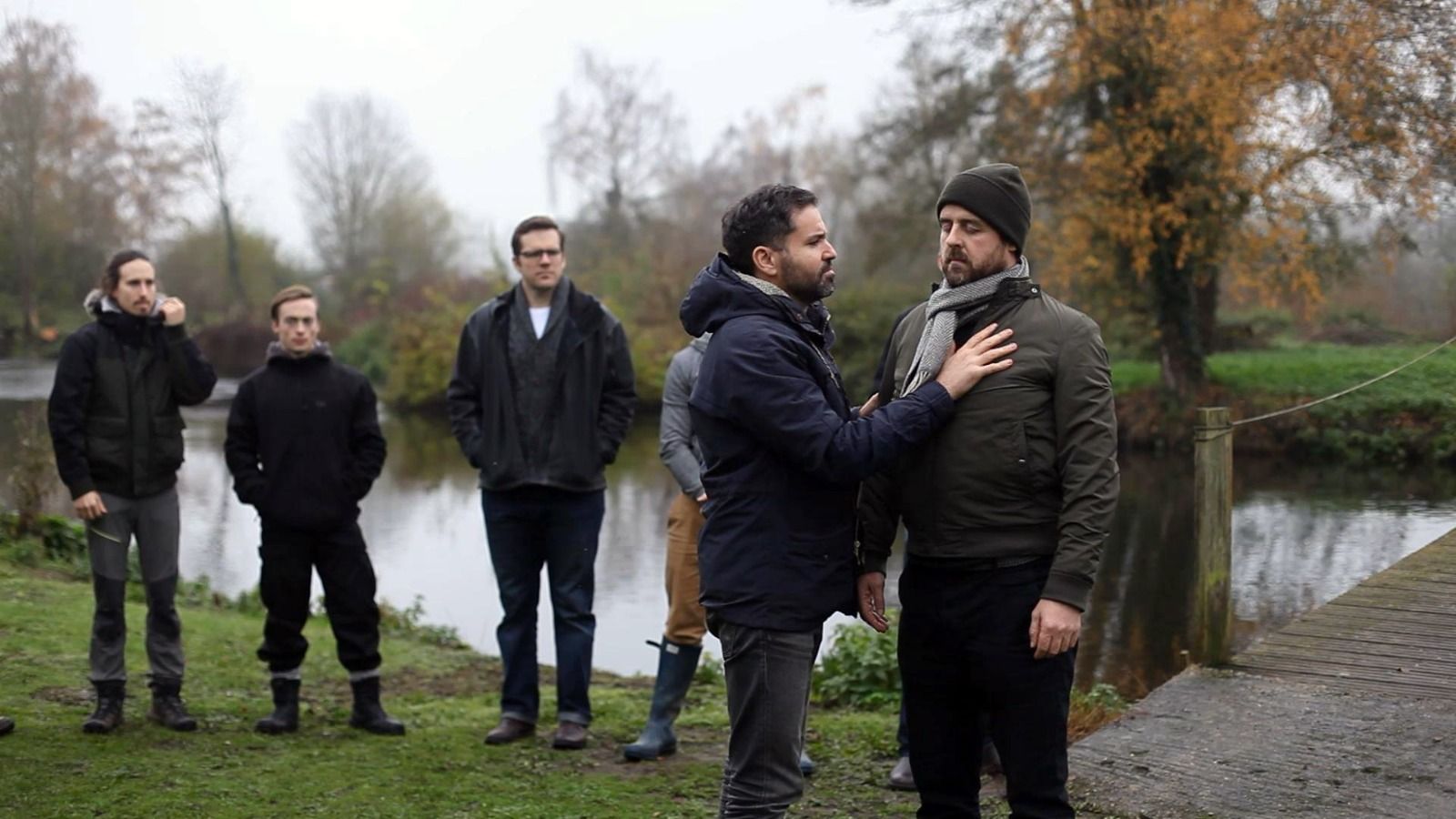
One of the defining features of shadow work for men is the group container. This isn't a support group or a talking circle. It's a facilitated process where men witness each other doing deep work. That witnessing matters. Many men spend their lives performing masculinity in isolation. They've never been seen in vulnerability by other men, not really. The group becomes a place where you can stop performing.
Sascha Michel, who facilitates shadow work groups and retreats in the UK, trained directly with John and Nikola Kurk and has spent over a decade staffing with the Mankind Project. The Mankind Project pioneered men's group work in the 1980s, drawing on Robert Bly's work and Jungian psychology. The model recognises that men heal in the presence of other men. Not because women can't hold that space, but because the relational dynamic is different. There's less performance, less need to manage how you're being perceived.
At Integrate the Shadow retreats, held at the Vedanta Retreat Centre in Lincoln, groups are capped at eight in a mixed group setting. That's intentional. Small enough for depth, large enough for diversity of experience. The weekend format allows time for the nervous system to settle, for defences to soften and for the work to go beneath the surface. You're not talking about your week. You're engaging with the material that's been running you.
What Happens in a Shadow Work Session
A shadow work process typically begins with identifying a repeating pattern. Maybe it's shutting down in conflict. Maybe it's overwork as a way to avoid intimacy. Maybe it's a persistent low-level anger you can't account for. The facilitator helps you track that pattern back to its origin, often in childhood. This isn't psychoanalysis. It's direct, embodied work.
You might be asked to voice a part of yourself that's been silenced. Or to physically hold a posture that matches an emotional state. The process often involves what's called archetypal work, engaging with the inner figures Jung identified: the Sovereign, the Warrior, the Magician, the Lover. These aren't metaphors. They're lived energies, and most men have exiled at least one of them.
The work can be intense. It's not uncommon for grief or rage to surface. But it's held carefully. Shadow work facilitators are trained in trauma-informed practice and nervous system regulation. The point isn't to overwhelm you. It's to help you metabolise what you've been carrying. Sascha Michel's background includes over 20 years of personal development work. He's not operating from a script. He's responding to what's alive in the room.
The Role of the Body
Unlike talk therapy, shadow work treats the body as primary. Your nervous system holds information your mind has long forgotten. A tightness in the chest. A clenching in the jaw. These aren't incidental. They're the body's way of containing what couldn't be expressed. The work involves learning to track these sensations, to follow them rather than override them. Breathwork, movement and somatic awareness are woven through the process.
This is where men often hit resistance. We're conditioned to stay in our heads, to solve problems cognitively. Shadow work asks you to drop below that. It's uncomfortable at first. But it's also where the shift happens. You can't think your way into integration. You have to feel it.
Who This Work Is For
Shadow work for men in the UK tends to attract those who've already done some personal development. You've read the books. You've tried therapy. You know yourself well enough to know there's more to access. You're not looking for quick fixes or surface-level strategies. You want to understand why you keep ending up in the same place, despite your best efforts.
It's also for men who are tired of performing. Professionally successful, relationally stuck. High-functioning but not actually happy. The kind of stuck that doesn't show up on a CV but costs you in intimacy, creativity and aliveness. This work isn't about optimising your life. It's about reclaiming parts of yourself you didn't know you'd lost.
That said, shadow work isn't for everyone. If you're in acute crisis, therapy or clinical support is the right place to start. If you're looking for a quick turnaround, this probably isn't it. The work requires commitment, and it doesn't promise transformation. What it offers is depth, honesty and the chance to stop running from yourself.
What a Retreat Involves
Integrate the Shadow runs residential retreats at the Vedanta Retreat Centre, a 75-acre estate two hours from London. The venue matters. You're not squeezing this into your lunch break. You're stepping out of your routine, which is half the point. The setting is quiet, deliberately so. Private en-suite rooms. Plant-based meals. Access to woodland and meditation space. The external simplicity creates room for internal complexity.
The weekend begins on a Friday evening and runs through to Sunday afternoon. Groups are co-facilitated by Sascha Michel and Alexandra Beeley, both certified Shadow Work facilitators. The structure includes individual process work, group witnessing and integration time. You're not on all weekend. There's space to walk, to reflect, to let things settle. The retreats in 2026 are scheduled for May and September, with an international retreat in Tulum also planned. Standard cost is £950, with an early bird rate of £850. Payment plans are available.
For men who prefer one-to-one work, Sascha also offers individual shadow work coaching. The sessions run between 4-6 hours, conducted in person, and follow the same principles as the group work. Some men start with individual sessions before joining a retreat. Others do both in parallel. There's no prescribed path.
The Difference Between Shadow Work and Therapy
This comes up often. Shadow work isn't therapy, though it's therapeutic. Therapy tends to focus on symptom management, narrative reframing and cognitive insight. Shadow work focuses on uncovering and integrating disowned material. The modality is different. So is the relational frame. In therapy, the therapist holds the container. In shadow work, the group and the process hold it. The facilitator is a guide, not an interpreter.
Many men find that shadow work complements therapy rather than replacing it. Therapy helps you understand the story. Shadow work helps you change your relationship to it. If you've spent years in therapy and still feel like something's missing, this might be why. You've analysed the pattern. You haven't yet reclaimed the part of yourself that's driving it.
The Mankind Project Connection
Sascha Michel's work is informed by his experience with the Mankind Project, a global network of men's groups that's been operating since 1985. The Mankind Project introduced thousands of men to the shadow, often for the first time. The model combines Jungian psychology, ritual and peer accountability. It's not religious, not prescriptive. It's experiential. Shadow work operates in a similar vein. The focus is on lived experience, not doctrine.
What You Can Expect After the Work
Shadow work doesn't promise epiphanies or overnight change. What it does offer is clarity. You start to see the patterns more quickly. You notice when you're projecting, when you're shutting down, when you're compensating. That noticing is the beginning of choice. Over time, the work creates more space between stimulus and response. You're less reactive. More present. The qualities you buried, vulnerability, creativity, softness, start to become accessible again.
Some men report shifts in their relationships. They're able to stay in difficult conversations rather than withdrawing. Others notice changes in their work: less drivenness, more discernment. The outcomes are personal and they're gradual. This isn't a fix. It's an ongoing practice of integration.
How to Know If This Is Right for You
If you've read this far and something's resonating, that's worth paying attention to. Shadow work attracts men who are ready to stop managing their lives from the surface. If you're curious about what you've been avoiding, if you sense there's more to access, if you're tired of the same patterns showing up in different clothes, this might be the work. It's not comfortable. But it's honest. And for many men, that honesty is what's been missing.
You can learn more about the process at what is shadow work or explore the origins of shadow work to understand the lineage. If you want to speak with Sascha directly, you can book a call. There's no pitch. Just a conversation about whether this is the right fit. For those ready to commit, details on upcoming group retreats are available on the site. Payment plans can be discussed during the enquiry process.
What is shadow work for men and how does it differ from therapy?
Shadow work for men is a depth process based on Carl Jung's concept of the shadow, the parts of yourself you disowned early in life because they weren't safe to express. Unlike traditional therapy, which focuses on cognitive insight and symptom management, shadow work engages the body, emotions and unconscious material through guided process work. Sascha Michel, a certified Shadow Work facilitator, describes it as working with what's been running you beneath conscious awareness. Many men find it complements therapy rather than replacing it, particularly if they've spent years in talk therapy but still feel something's missing. You can explore the foundations further at what is the shadow.
Why is group work important in shadow work for men?
Group work provides a container where men can witness each other in vulnerability, something most men have never experienced outside of performance. Sascha Michel, who has staffed with the Mankind Project for over a decade, notes that men heal differently in the presence of other men. The relational dynamic shifts. There's less managing of perception, more permission to drop the mask. At Integrate the Shadow retreats, groups are capped at eight participants to ensure depth and safety. The group doesn't offer advice or fix you. It holds space while you do the work. This mirrors the men's circle tradition pioneered by the Mankind Project and influenced by Robert Bly's work in the 1980s.
Who is shadow work for men in the UK designed for?
This work tends to attract men aged 35 to 55 who've already done some personal development and are looking for something deeper than talk therapy. You're professionally established but relationally stuck. You've read Jung, Gabor Maté, maybe Oliver Burkeman. You know yourself well enough to know there's more to access. Shadow work isn't for acute crisis, that's the domain of clinical support. It's for men who are tired of performing, who want to understand why the same patterns keep showing up despite their best efforts. Sascha Michel works with men who are curious, sceptical and ready to stop managing from the surface. If that sounds familiar, you can book a call to explore whether this is the right fit.